

The letter shows up in November or December. Your workers’ comp carrier has completed the annual audit, and the premium adjustment is due. For many trade contractors, that number is a surprise. Sometimes a big one.
It shouldn’t be. But when payroll systems lump labor hours into a single insurance classification regardless of the actual work being performed, the math at audit time rarely matches what was estimated at the start of the policy year. The insurer finds high-risk hours that weren’t properly coded. You get a bill. Your cash flow takes a hit at the worst time of year.
Specialized payroll services for construction companies prevent that scenario by mapping labor to the correct NCCI class code at the moment hours are entered, not after the fact, not at year-end. When that data stays accurate throughout the policy period, the audit produces no surprises.
The Math Behind Workers’ Comp Surprises in Commercial Trades
Workers’ compensation premiums are calculated against payroll dollars, but not all payroll dollars carry the same rate. The National Council on Compensation Insurance assigns classification codes to different types of work, and the premium rates tied to those codes vary significantly based on the risk level of the task.
Commercial roofing work, classified under NCCI code 5551, carries one of the highest premium rates in construction. Framing runs under code 5645. Electrical work falls under 5190. But supervisory work, shop labor, and clerical tasks carry much lower rates. A foreman who spends part of his week in the field and part reviewing drawings in the office doesn’t carry the same risk profile for the full week. If your payroll system codes all his hours at the roofing rate, you’re overpaying on the low-risk portion. If a general platform defaults his labor to a single high-rate classification across the board, the error compounds across every pay period.
Misclassification cuts both ways. Overpaying on low-risk hours wastes premium dollars. Under-reporting high-risk hours creates audit findings. When an insurer’s auditor reviews your payroll records and finds that hours for exposed roofing work were coded at a lower rate, or that cleanup and ground labor weren’t segregated from installation work, they reclassify those hours and issue a retroactive adjustment. That adjustment is what produces the year-end bill.
Manual sorting at month-end doesn’t solve the problem reliably. Spreadsheets require someone to review every pay period and assign class codes based on memory, timesheets, or supervisor notes. That process breaks down when the office is busy, when timesheets are late, or when a worker performs three different tasks across two job sites in the same week. Errors accumulate quietly and don’t surface until the auditor finds them.
Automating Risk Mapping with a Dedicated Construction Payroll System
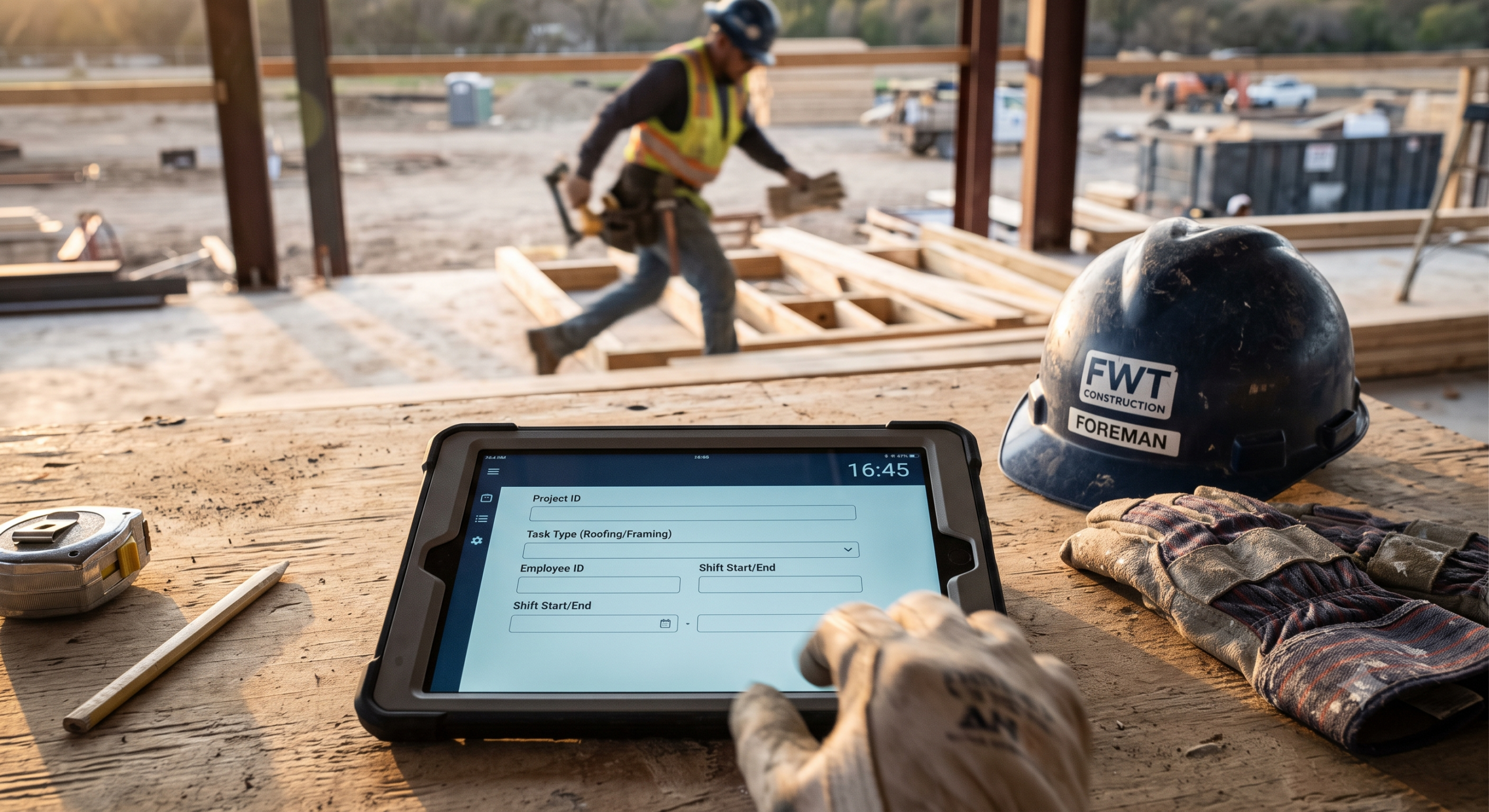
The point of correction is the timesheet, not the audit. When a field worker enters hours, the payroll system should assign the corresponding workers’ comp class code based on the task and job site at that moment. That’s what a construction payroll system built with risk mapping logic does.
Real-time class code assignment means every hour carries the correct classification from the first entry. A roofer who spends Monday and Tuesday on an exposed installation and Wednesday doing ground-level debris removal gets the appropriate code applied to each day separately. The premium calculation for that worker reflects actual risk exposure, not a blanket rate applied to the full week.
Mixed-work days are common in construction, particularly in smaller crews where workers move between tasks or trade categories within the same pay period. A construction payroll system that handles task-level classification can split those hours correctly. That capability is what prevents the most common audit findings: hours recorded at the wrong rate because the system couldn’t distinguish between what the worker was doing at 8 AM versus 2 PM.
Pay-as-you-go workers’ comp integration extends that accuracy to the premium itself. Instead of paying a lump-sum estimate at the start of the policy year and reconciling it twelve months later, premiums calculated against actual payroll each period. The data flowing into that calculation is clean and class-code specific. When the audit comes, the insurer’s numbers match yours because the underlying records were accurate all year.
Taking Control of Your Annual Audit
Audit preparation used to mean pulling paper files, cross-referencing timesheets, and spending days reconstructing which hours belonged to which classification. With a dedicated construction payroll system, that process compresses into a report run.
When an insurance auditor requests itemized payroll by classification, you generate it. Hours by NCCI code, by employee, by job site, by pay period. The report is already built from data that was captured correctly throughout the year. Your exposure to reclassification is minimal because the class codes were applied at entry, not reconstructed after the fact.
Long-term, that accuracy protects more than cash flow. Your experience modification rate, the EMR, reflects your claims history and how accurately your payroll has been classified over time. Contractors with clean, well-documented payroll records and low audit adjustments tend to see more favorable EMR calculations, which affects what you pay for coverage year over year. Payroll services for construction companies that maintain that level of classification accuracy function as a risk management tool, not just a wage processing platform.
ConstructionPayroll.com brings 34 years of trade-level payroll experience to that process. Our team understands NCCI classification logic, mixed-work-day documentation, and the reporting structures that insurance auditors expect. That background means our clients walk into audit season with organized records and minimal exposure to surprise adjustments.
A few questions worth reviewing before your next policy renewal:
- Does your current payroll system assign workers’ comp class codes at the task level, or does it apply a single classification to all hours?
- Can you generate an itemized payroll report by NCCI code on demand, or does your controller build that manually for the auditor?
- Are pay-as-you-go premium calculations drawing from accurate, class-code-specific payroll data each period?
- If a worker performs multiple tasks in the same week, does your system split those hours by risk category automatically?
Workers’ comp audit bills feel sudden. They aren’t. They’re the result of classification data that drifted from reality throughout the policy year. A construction payroll system that captures the correct class code at every hour entry keeps that drift from happening.
Book a meeting with our team to see how class code mapping works inside the platform and what your current payroll records would look like heading into an audit.